The Coffee County Problem.
In Tullahoma And Manchester ...
50% Air Contamination
Due to natural pressure, up to 50% of the air inhaled inside a Coffee County home is drawn directly up from the damp crawl space below.
100% Out Of Pocket
Standard homeowners insurance explicitly excludes "gradual ground seepage" and "environmental humidity" meaning $0 of insurance coverage for structural damage
What You Can Do Yourself ...
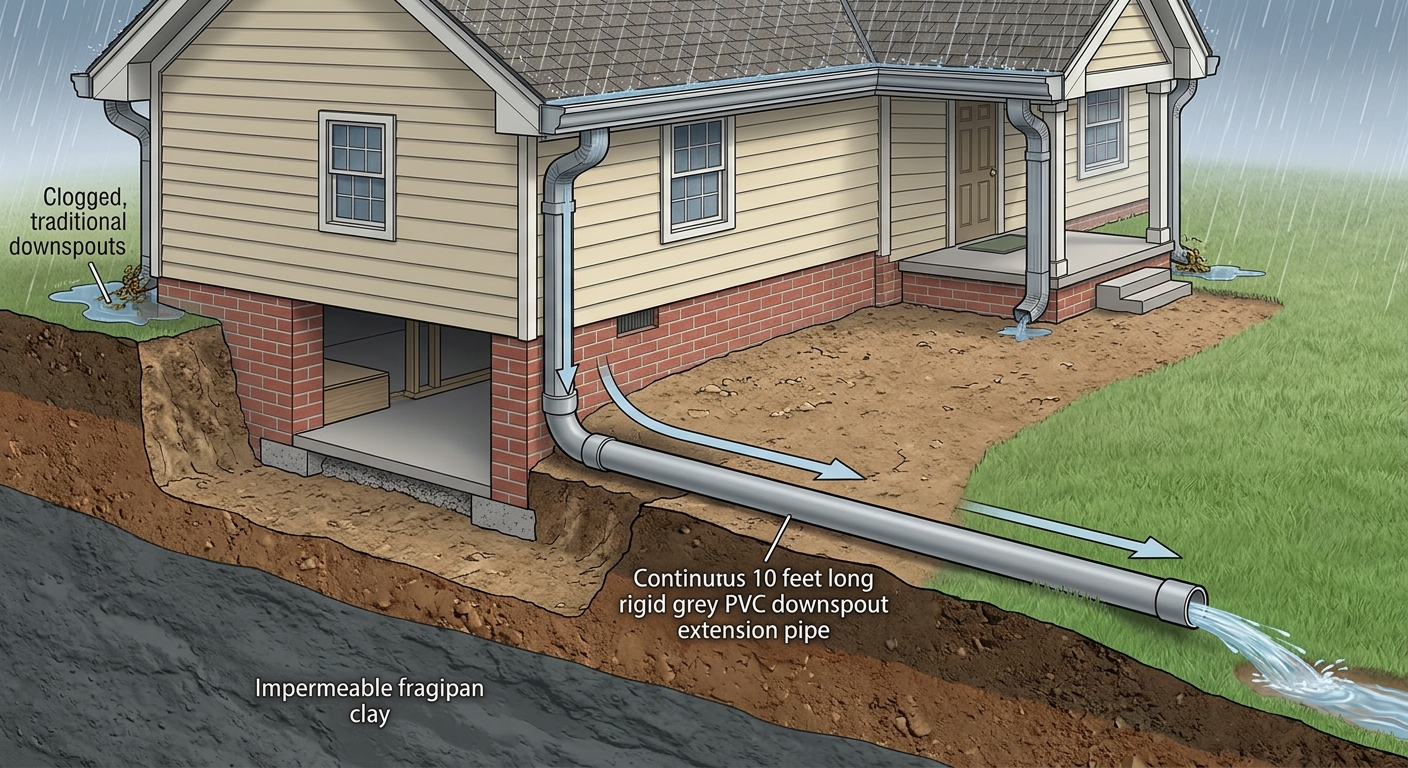
Divert Runoff.
The Fix: Attach 10 foot rigid or flexible drain pipe extensions to all roof downspouts.
Why It Helps: Dumping hundreds of gallons of rainwater directly next to the foundation forces water through topsoil where it hits heavy, impermeable fragipan soil and flows straight into the crawl space. Directing water well away from the foundation wall prevents pooling before it starts.
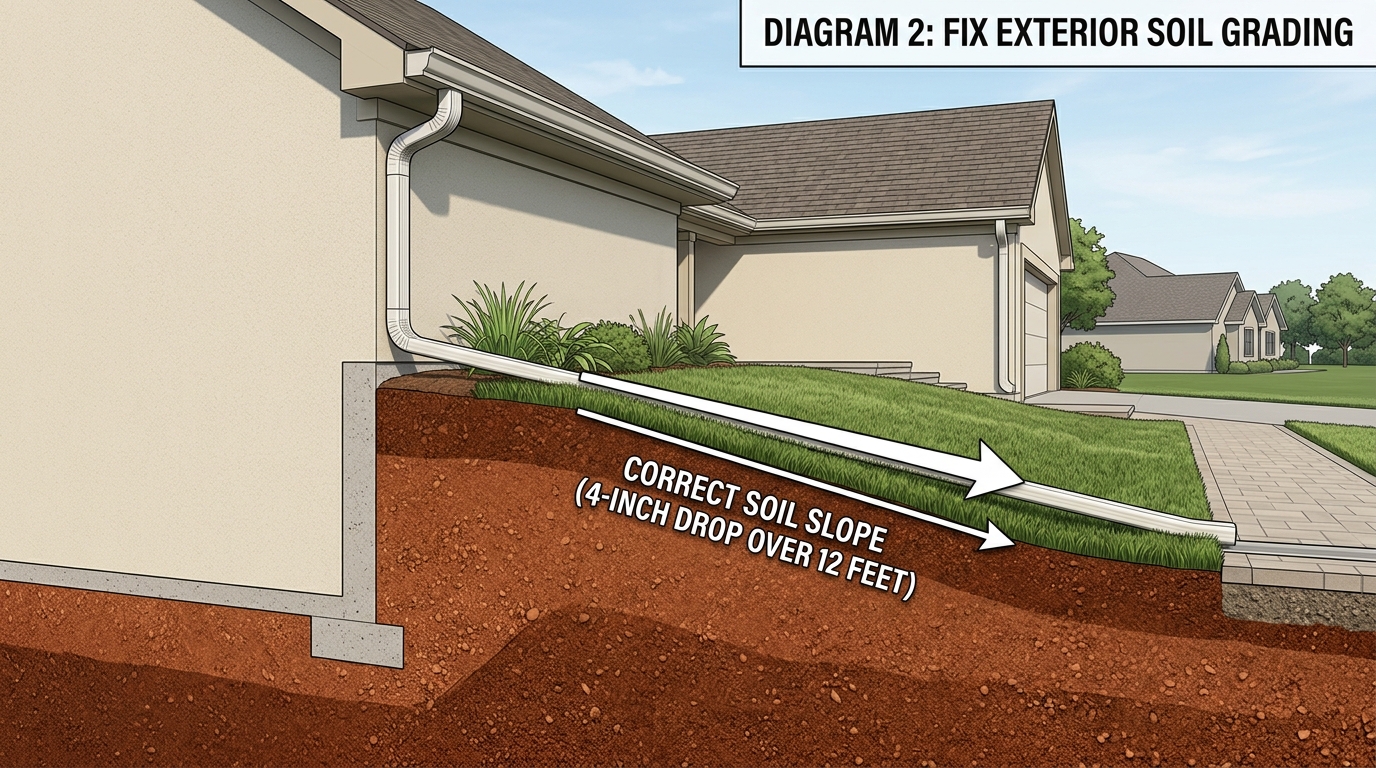
Soil Grading.
The Fix: Add clean fill dirt around the perimeter foundation to create a gentle, downward slope away from the house (ideally a drop of 6 inches over the first 10 feet).
Why It Helps: Rainwater often pools in flat areas against foundation walls. Correcting the slope uses gravity to push surface water off to the yard instead of letting it soak down underneath.
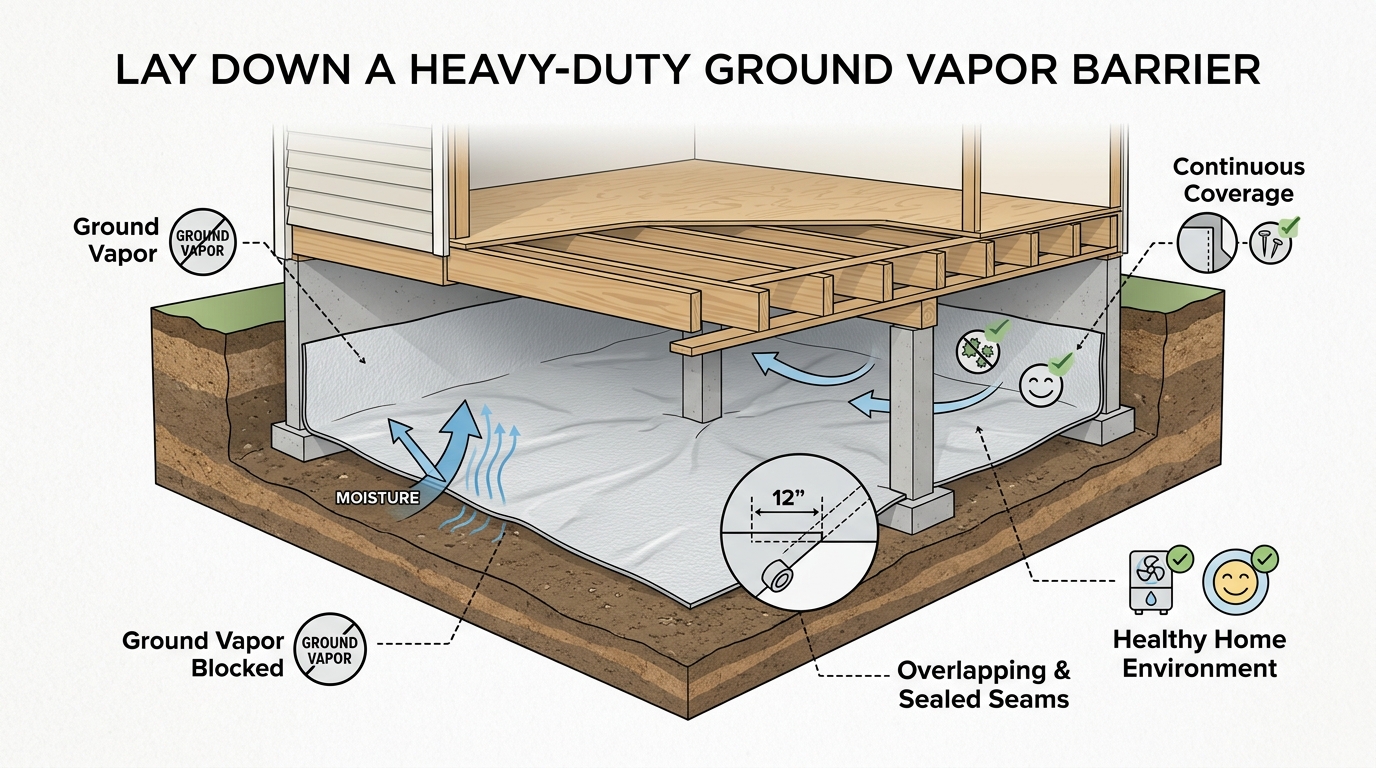
Strong Vapor Barrier.
The Fix: Cover 100% of the exposed dirt inside the crawl space with a durable plastic sheeting overlapping all seams by 6 inches and sealing with heavy-duty tape.
Why It Helps: Ground moisture evaporates upward into crawl space air. A thick barrier blocks that vapor, keeping humidity down and protecting the crawlspace from mold.
What You Better Not Do Yourself ...
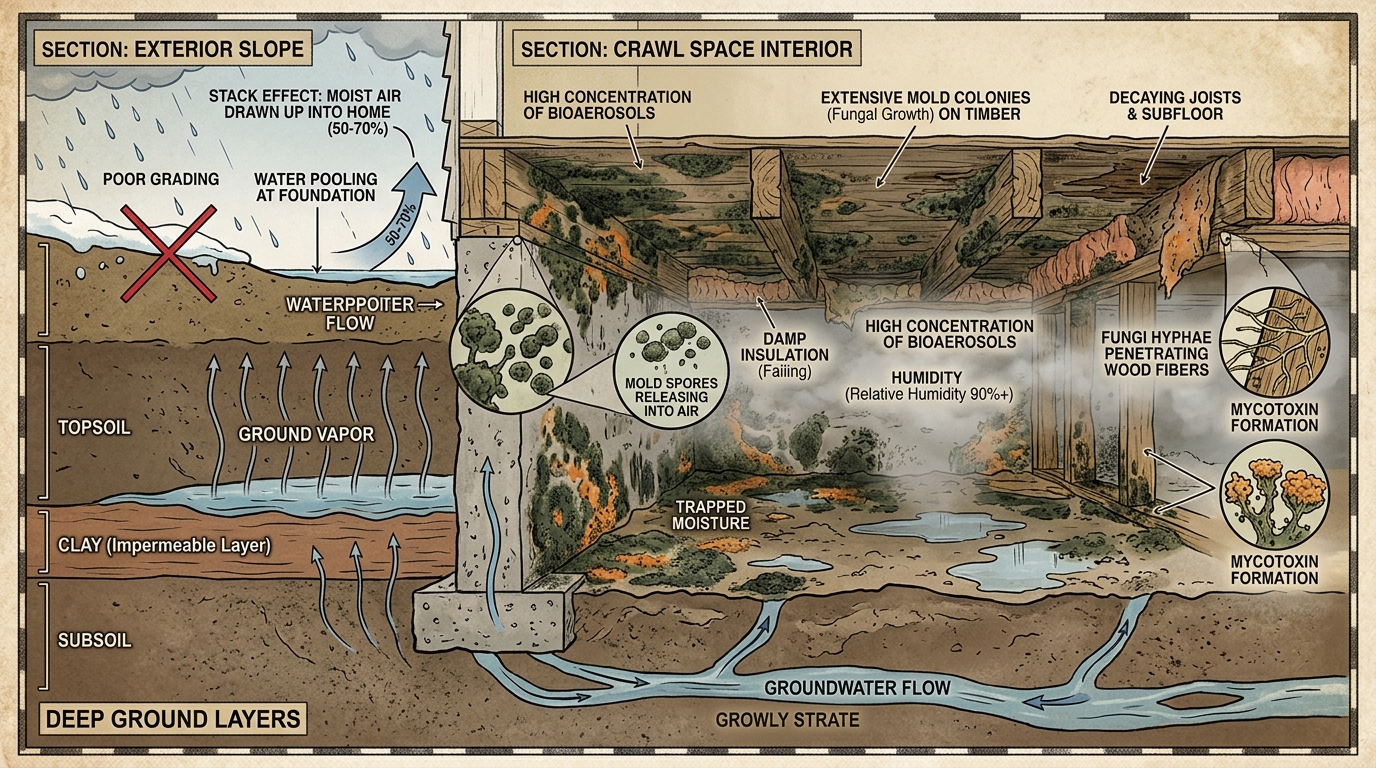
Mold Removal.
Why You Need A Pro:
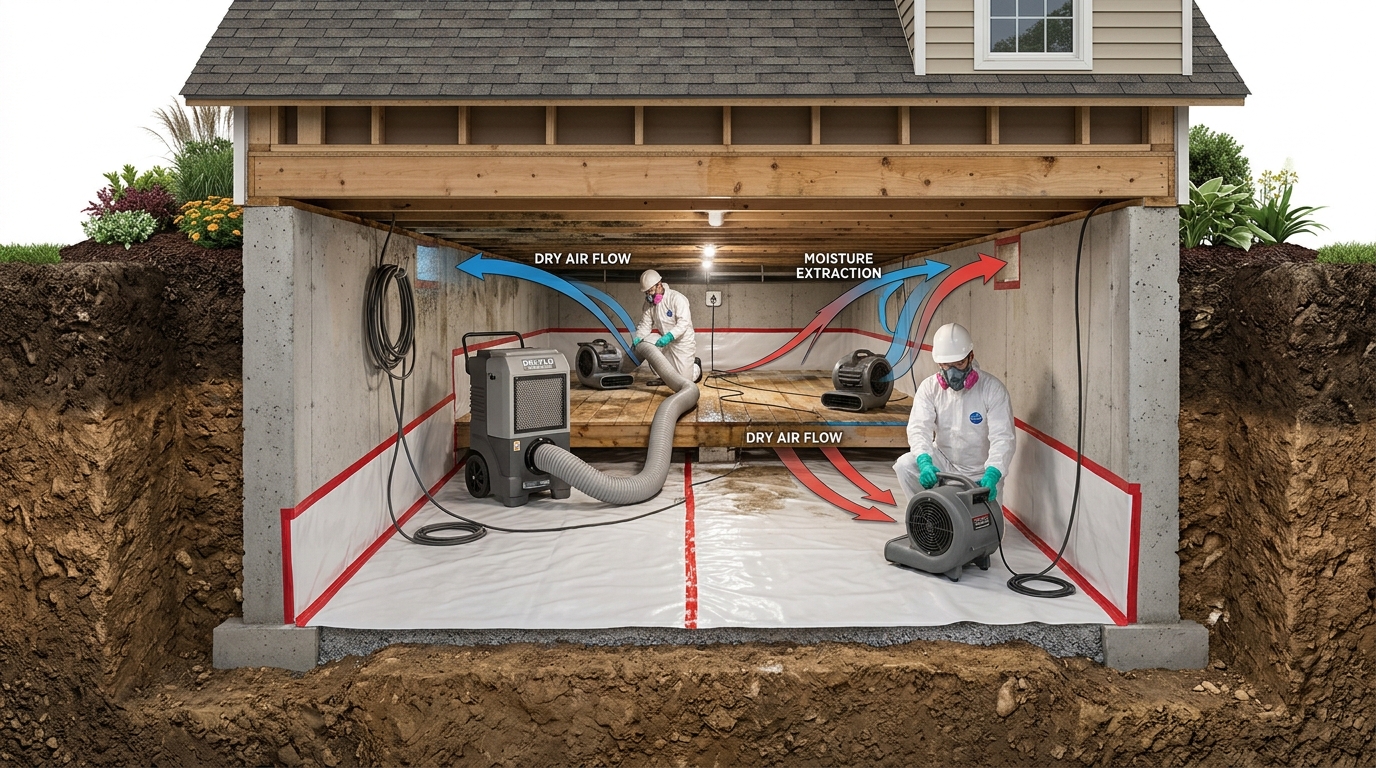
Homeowners attempting DIY mold removal often accelerate the destruction of their property while pumping toxic spores directly into their family's breathing air. Without industrial containment, scrubbing a crawl space turns a localized moisture problem into a whole-house contamination crisis.
Drying Hazardous Areas.
Why You Need A Pro:
Standard fans only dry surface areas.Effective mitigation demands commercial-grade, LGR (low grain refrigerant) dehumidifiers, high-capacity air movers, and moisture meters to verify that structural framing reaches safe drying standards. Or you'll just create a mold factory!
Encapsulating Crawlspace.
Why You Need A Pro:
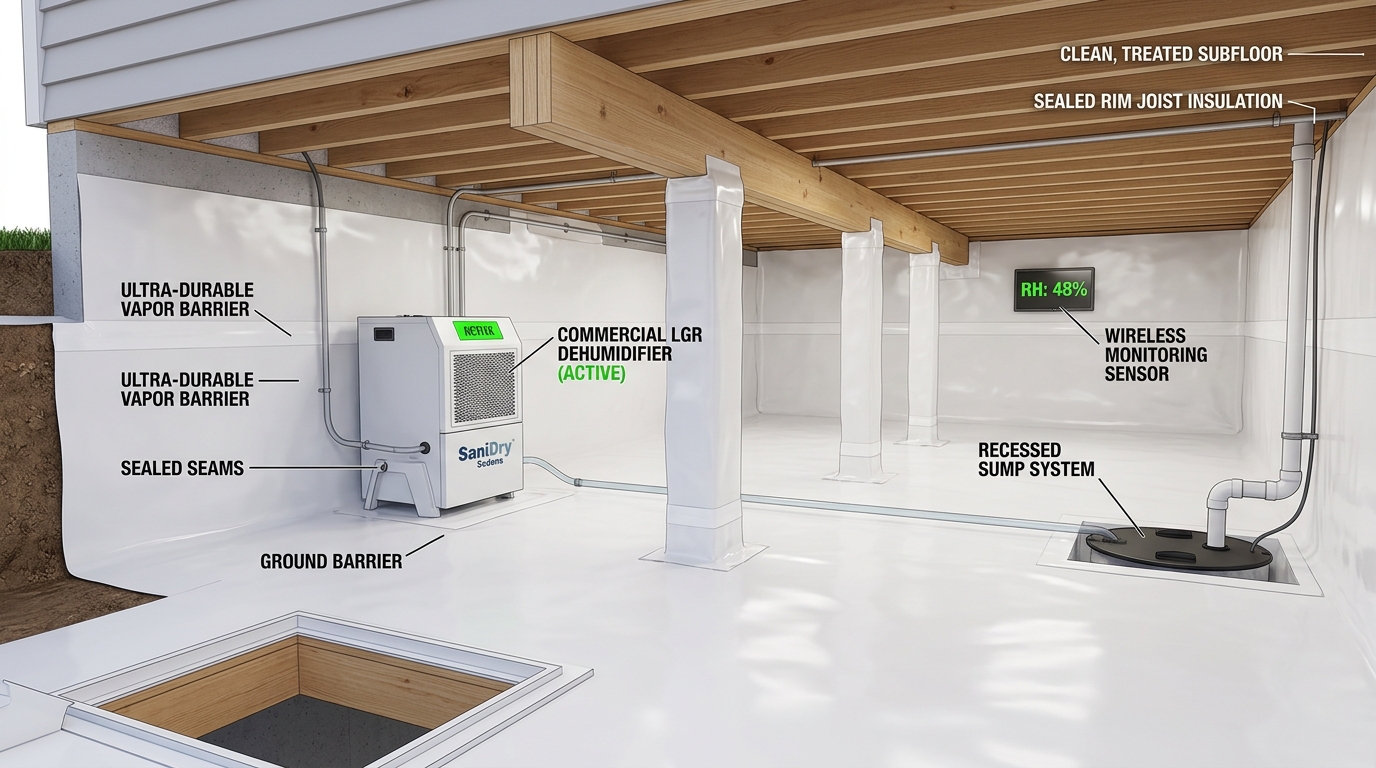
DIY crawl space encapsulation frequently leads to trapped bulk water and indoor air quality issues. Closing off foundation vents in a crawl space housing gas-fueled furnaces or water heaters can cause dangerous backdrafting, pulling carbon monoxide into the living areas.

I'm Ryan Knaub.
I'm not Ai.
I actually work right here in Coffee County. And whether or not you use us, please see a true professional for crawlspace work.
Seriously.
You can really bring more harm into your home if you don't address it the right way because Coffee County has serious issues with ground moisture. I work for Apex Restoration DKI. I would be the person you would be talking with directly about your crawlspace issue.
When I got into restoration I learned so much about what is happening to homes. And this is true for homes all over the South, but Coffee County has some exaggerated problems. One of them is ground mostiure due to the type of soil we have here.
When you go into as many homes as I do, you see what moisture, mold, and water do to nice homes where people had no idea what was happening beccause it was going on inside the walls or underneath the home.
Over 20 Years.
We've been serving all of Tennessee's restoration needs from right here in Coffee County for 20 years.
This simple video will show you what a crawlspace problem entails and how to deal with it.
Ground moisture and mold is a very real problem in Coffee County.
And we honestly mean it ... whether you use us or not ... please get a pro.
You can make things so much worse trying to do this yourself.
Call Me To Discuss It:
(931) 434-0877
Truths About Ground Moisture Under Your Home.
Why does my crawl space have standing water or high humidity?
Water enters crawl spaces through three main paths: surface runoff pooling near foundation walls, ground water rising due to impermeable clay/fragipan layers beneath topsoil, and humid outdoor air entering foundation vents during summer. Once inside, moisture cannot evaporate, leading to standing pools, damp wood framing, and elevated humidity levels.
Will my homeowners insurance cover mold remediation or water damage?
In most cases, no. Homeowners policies standardly exclude mold damage resulting from ongoing maintenance issues, ground water seepage, elevated humidity, or long-term leaks. Insurance generally only covers water damage if it is caused by a sudden, accidental internal discharge (like a burst pipe), and even then, mold coverage is often capped or completely excluded unless an optional endorsement was added prior to the event.
Can I just spray bleach to clean up the mold myself?
PLEASE do not do this. Chlorine bleach only oxidizes surface-level discoloration and consists mostly of water. Wood is porous. Mold has penetrated into your wood structures underneath the home. Bleach only wipes the surface. On porous surfaces like wooden floor joists, the water soaks in while the chlorine evaporates on top, feeding the microscopic fungal roots (hyphae) deeper in the wood. Furthermore, scrubbing mold without professional negative-air containment distributes millions of spores directly into the HVAC system and upper living spaces via natural upward airflow (the stack effect).
Should I open my foundation vents during the summer to dry it out?
No, this actually worsens the problem. Warm, humid outdoor air enters the cool crawl space, hits cold surfaces like concrete walls or ductwork, and reaches its dew point—causing heavy condensation. To properly dry a crawl space, foundation vents must be sealed and replaced with mechanical dehumidification.
What is the difference between laying a vapor barrier and full encapsulation?
A standard vapor barrier (thin plastic sheeting on the dirt floor) only slows down ground moisture evaporation into the air. Full encapsulation completely seals the space: installing heavy-duty (12 to 20-mil) reinforced sheeting over 100% of the ground, walls, and support piers, sealing all seams airtight, closing foundation vents, and adding a dedicated commercial LGR dehumidifier to permanently control humidity levels.